Pretty good turnout, lots of neighbors.
Recurrent Dream
I awoke this morning from a distressing dream, of a recurrent type. I am to play an important concert for a large gathering, perhaps for a religious group like the SDA or Mormon Church. I only have to play one work, one that I have played frequently, perhaps Bolcom’s “Graceful Ghost” Rag. Crowds begin to gather in this large hall. I am treated with great courtesy, but the crowd is quite dense, looks like it will be several thousand. I suddenly realize that I do not have my score, and cannot perform from memory. It is too late to go home. I think, well, the music director must have a score, and I can use that. I ask someone, is there a music director? But they are busy, and just gesture towards a locked door. Then I realize that I do not have my glasses either, and won’t be able to see to play.
I think this is a dream about the perils of celebrity, an issue that bubbles through my subconscious.
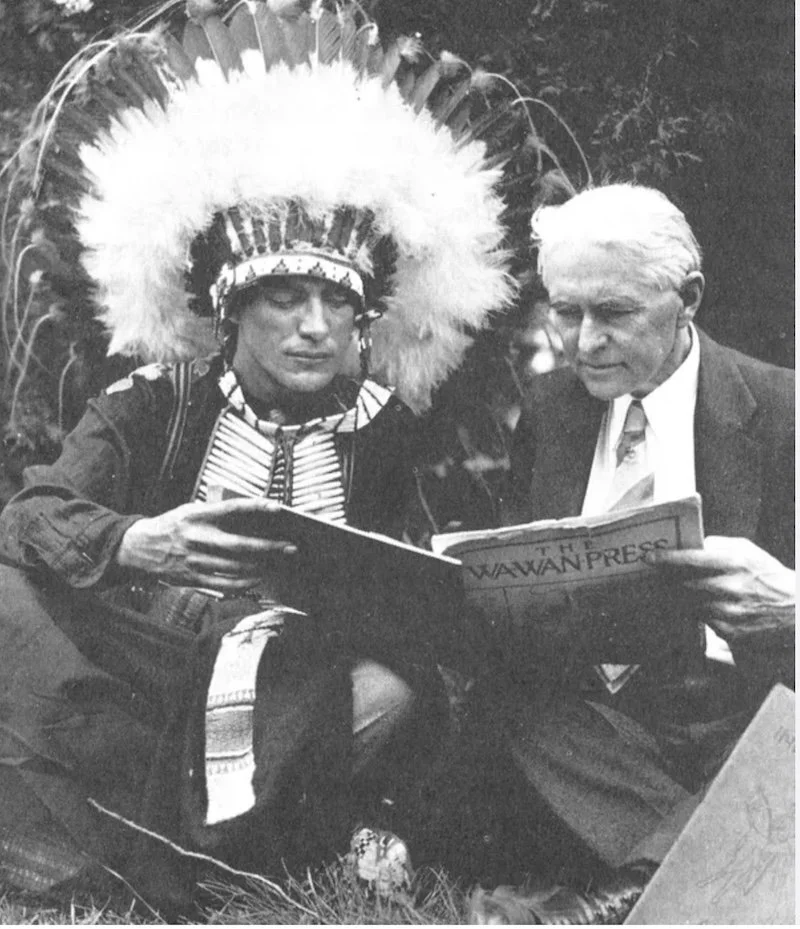
The "Indianists"
From Wikipedia:
“Arthur Farwell was perhaps the most important composer involved in the Indianist movement at the height of its influence. He professed interest in all forms of American music, "notably, ragtime, Negro songs, Indian songs, Cowboy songs, and, of the utmost importance, new and daring expressions of our own composers, sound-speech previously unheard." He seemed to show particular interest in American Indian music. Farwell founded the Wa-Wan Press, which published songs and other compositions of Indianist music in America. As a composer, Farwell did not regard American Indian music as a novelty, but as a profound source of inspiration for his work.”
The “Indianists” have been accused of “appropriation”, and as a result are almost entirely dismissed and neglected. But they were running around reservations with Edison wax cylinders, to preserve native American culture, and present it to the general public in notated and harmonized form. How is this different from Bartok, Kodaly, and Saygun?
Chopin, from under the piano
Formative memory: sitting under the piano as a 5 year old, listening to my aunt Thelma play.
Under the Piano
When I was little I used to sit under the piano when my aunt Thelma played, a wonderful experience! This clip is a little like that.
Signs of the Times
Chamber music is a dying art. Highly trained, superb classical musicians of my acquaintance are turning to events management, classroom teaching, and online businesses to get a steady paycheck, health care coverage, vacation pay and sick days, and better control their time. There is no one left to play music with.

“Deep River” woodcut by Ashley Bryan
Comfort in Hard Times
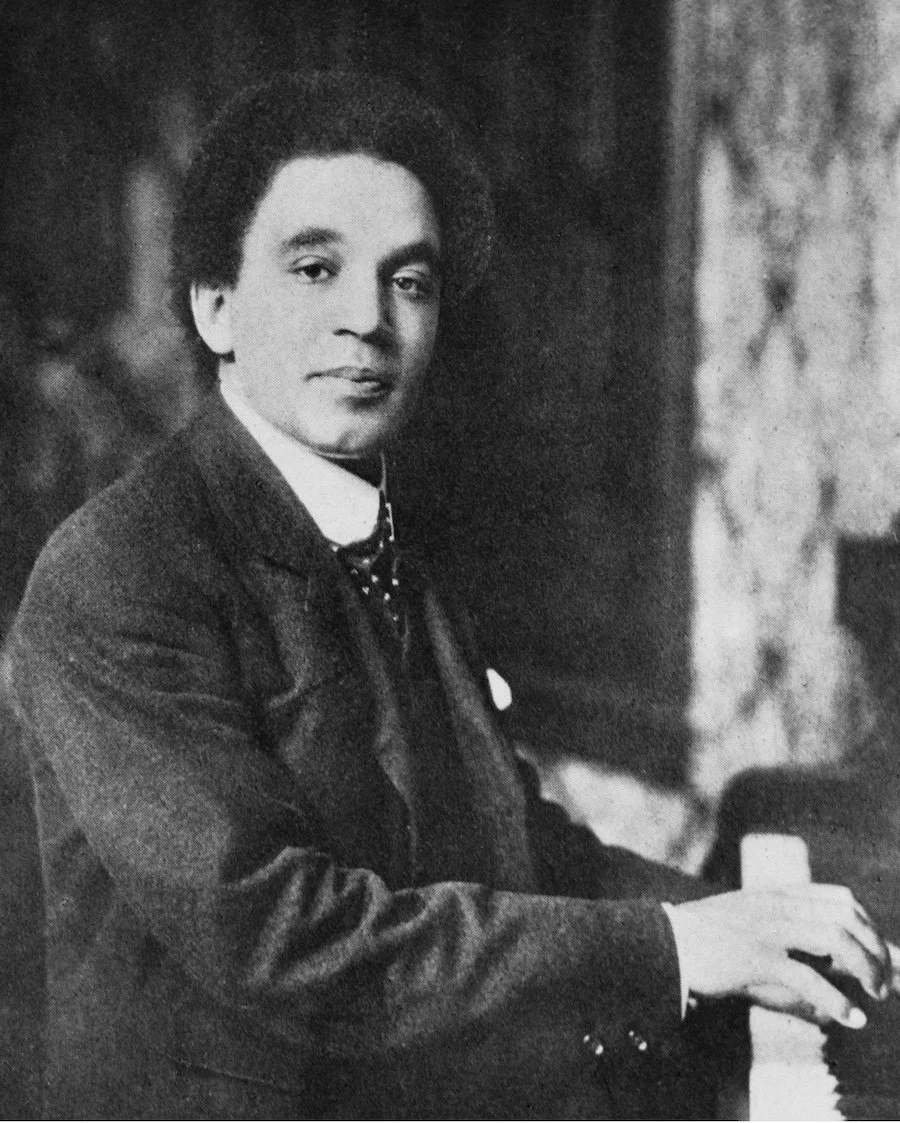
Samuel Coleridge-Taylor
Whereas Ullmann’s 7th Piano Sonata well reflects the despair and defiance appropriate to the present time, I take comfort from works like Harry T. Burleigh’s “From the Southland”, based on spirituals.
Looking around for more inspiration of this type, I was very excited to discover that IMSLP has Samuel Coleridge-Taylor’s “Twenty-Four Negro Melodies”, Op. 59, 127 pages of piano music from 1905. They are:
At the Dawn of Day
The Stones are Very Hard
Take Nabandji
They Will Not Lend Me a Child
Song of Conquest
Warrior's Song
Oloba
The Bamboula
The Angels Changed My Name
Deep River
Didn't My Lord Deliver Daniel?
Don't be Weary, Traveller
Going Up
I'm Troubled in Mind
I was Way Down a-Yonder
Let Us Cheer the Weary Traveller
Many Thousand Gone
My Lord Delivered Daniel
Oh, He Raise a Poor Lazarus
Pilgrim's Song
Run, Mary, Run
Sometimes I Feel Like a Motherless Child
Steal Away
Wade in the Water
I printed out “Many Thousand Gone”, and was thrilled to find that it appears to be the source of “We Shall Overcome”. Coleridge-Taylor has written a very powerful and moving piece on this theme, and I am determined to learn it. (“No more auction block for me! Many thousand gone.”)
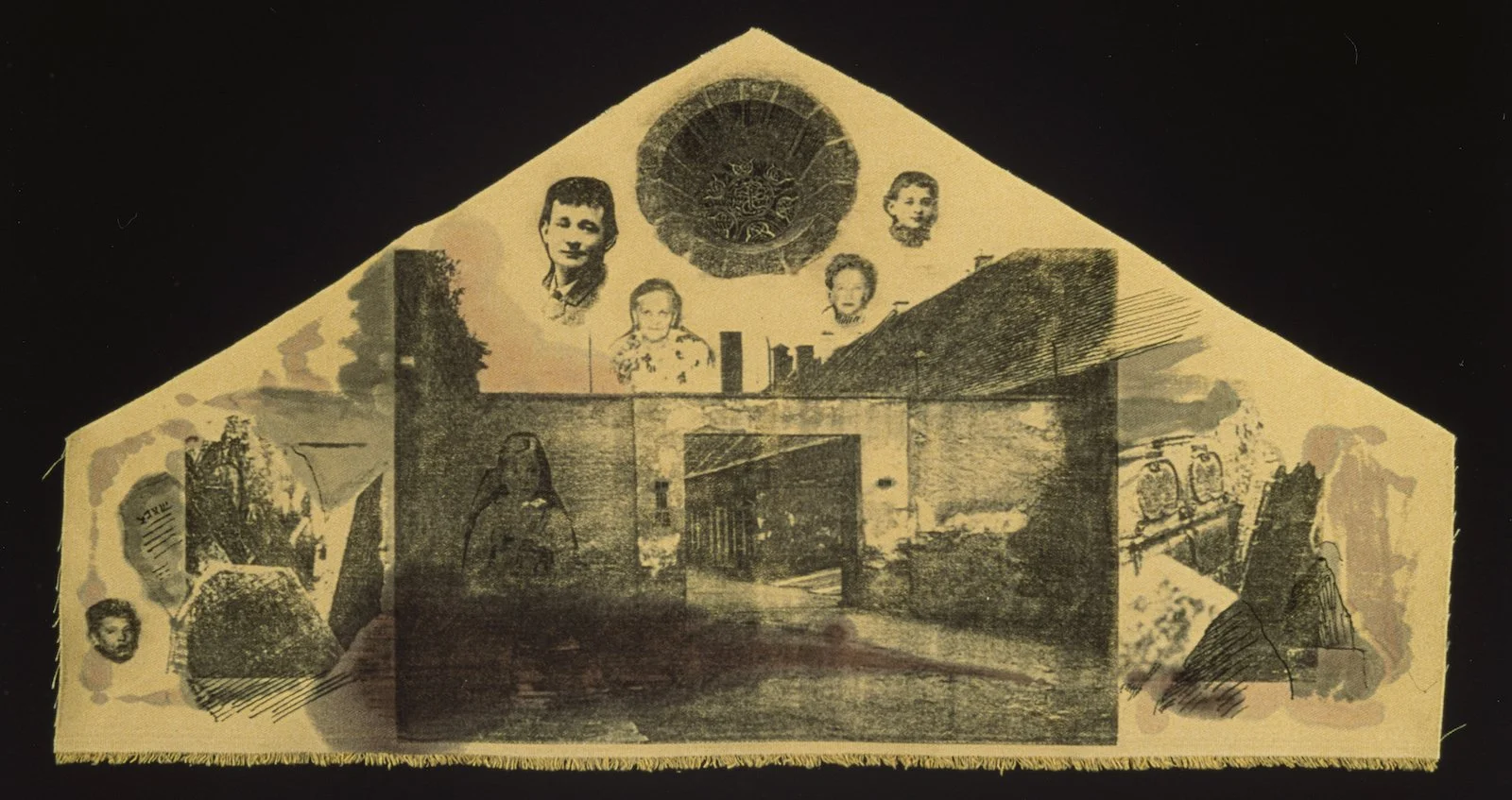
“The Little Fortress”, Marilyn Banner, 14 x 27”, Ink and Photo-transfer on dyed yellow fabric, 2000
The Times
None of the music I was practising sounded right last night after reading the news. So I went down the basement to pull out Viktor Ullmann’s 1944 Sonata #7. I think I will substitute it for something on upcoming programs.
The Price of Corruption - Defenestration?
emptywheel today.
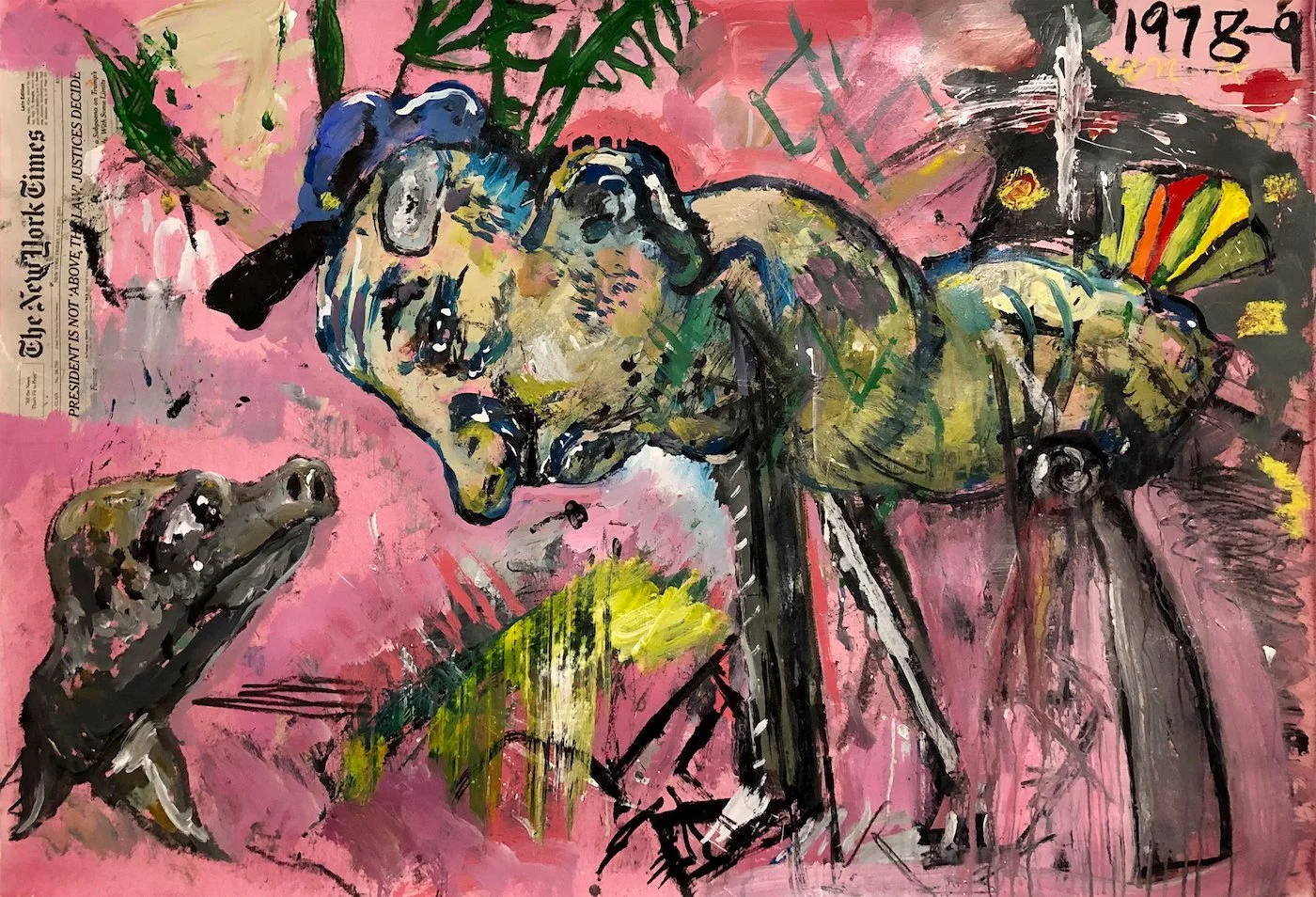
“Too Much On My Mind”, Dale Williams, acrylic, mixed media, and collage on paper, 30” x 44”, 2025
Dale Williams, artist
One of our favorite artists, Dale Williams, is opening his studio Oct. 18-19. His work gets increasingly relevant as the political situation deteriorates. If you will be in NY that weekend, it is well worth a trip to Gowanus. Here is a note from Dale:
Dear friends and colleagues -
I will be participating in the Gowanus Open Studios this year - once again. The tour takes place on Saturday and Sunday, October 18 and 19 from noon to 6pm each day. My studio is at 75 19th street, Brooklyn, 2nd floor. (note: the number on the door is 65/75). The nearest subway is R train to Prospect Avenue.The map on Gowanus Arts website will offer details. Here is a link to a map of the tour, and a gallery of participating artists:
And here is a link to my page in the artists directory:
https://gowanusarts.org/directory/dale-williams/
I hope to see you in a couple of weeks.
best -
Dale
"Against All Reason
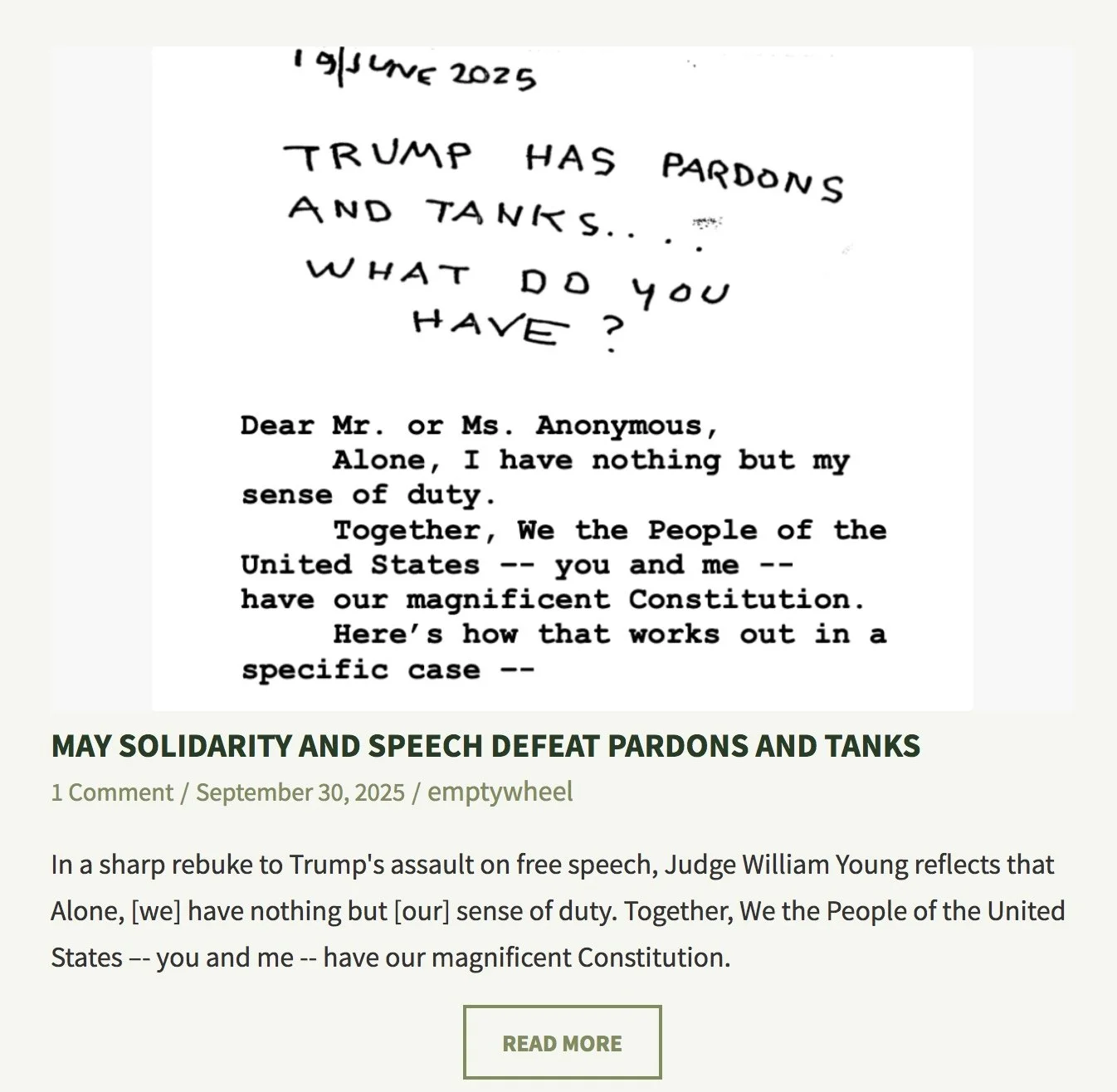
Pardons & Tanks
emptywheel quotes an inspiring opinion from a Reagan-appointed judge.
"Buttcracks and Beerbellies"
ICE is in my neighborhood, and in yours. Marcy Wheeler in emptywheel has a good piece on how this may unravel, and how we might help.

More from Wellfleet Library Concert
From the finale of the Schubert Sonata in Bb, September 26, 2025 at the Wellfleet Public Library, Carl Banner, piano. Video courtesy of Marilyn Banner.
Granddaughter as Seagull
Our granddaughter turning into a seagull.
Wellfleet Public Library Concert, Sept. 26, 2025
I will post some more clips from Marilyn’s iphone. She recorded a remarkable amount of music.
Molto moderato from Schubert Sonata in Bb, D. 960.
Andante sostenuto from Schubert Sonata in Bb, D. 960.
Scherzo, from Schubert Sonata in Bb, D. 960.
Mac's Ptown
We always go to Mac's Ptown when we are at the Cape. Marilyn loves the bartenders, wait staff, and clientele. She orders miso soup and sushi, and I get a lobster.
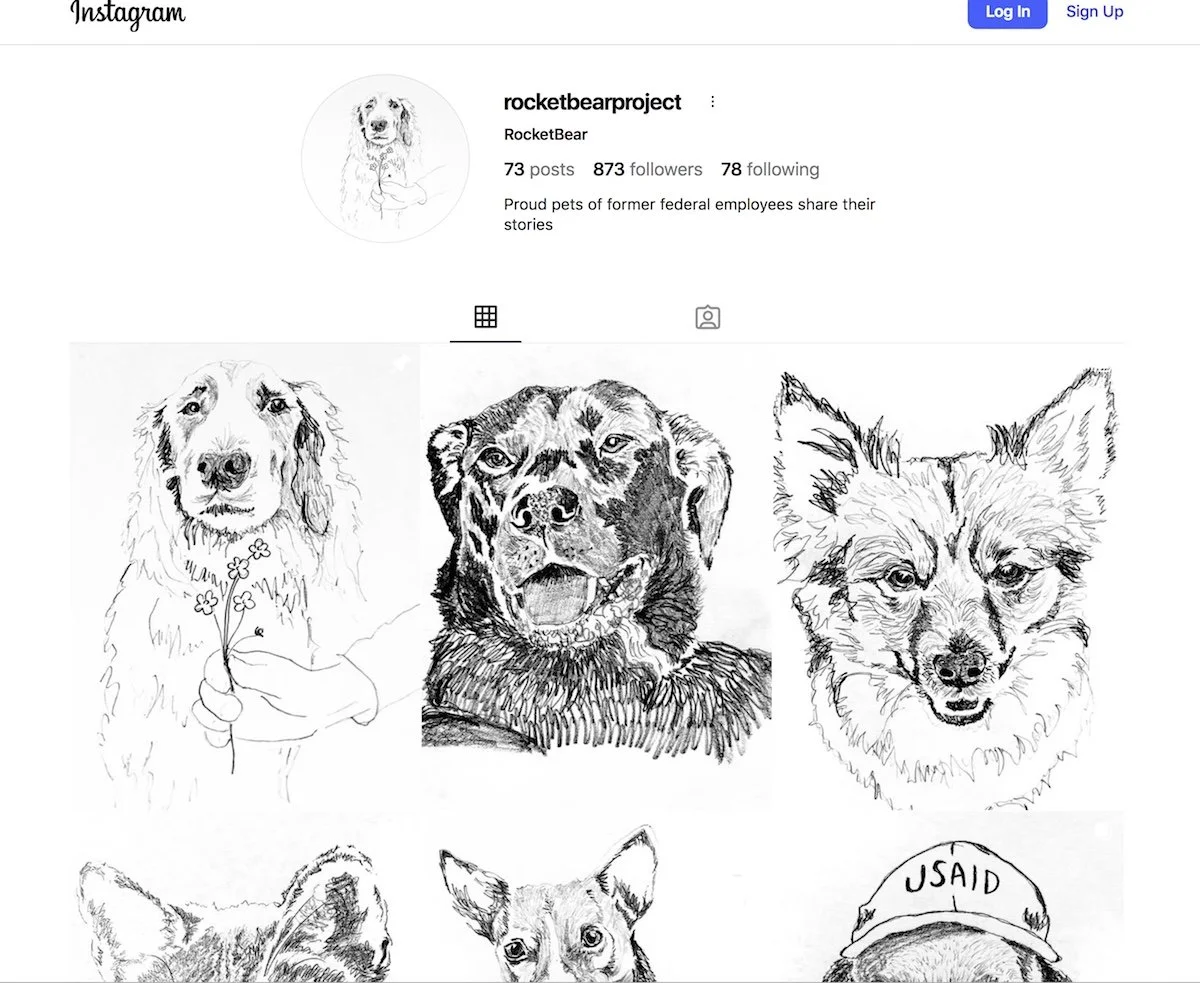
Art Grown from Community Need
There is art that grows directly out of community need. Here is a fascinating and timely example from our neighbor across the street, recently fired from USAID. We did not even know that she drew, though we have known her for 16 years. This was posted on the neighborhood listserv:
Hi neighbors
I am a recently fired federal employee (formerly with USAID), and I am doing a storytelling project on Instagram. I am drawing pet portraits of federal employees who were let go under this administration. I post the drawings on Instagram accompanied by a caption describing the person's work (told from the point of view of the pet). It is my way of sharing the diversity and impact of what is being lost due to the dismantling of the federal workforce.
Check it out: https://www.instagram.com/rocketbearproject/
If you would like to participate, feel free to send me a photo of your pet: RocketBearProject@gmail.com.
Thanks,
RocketBear's human (Flower Ave)
New Music
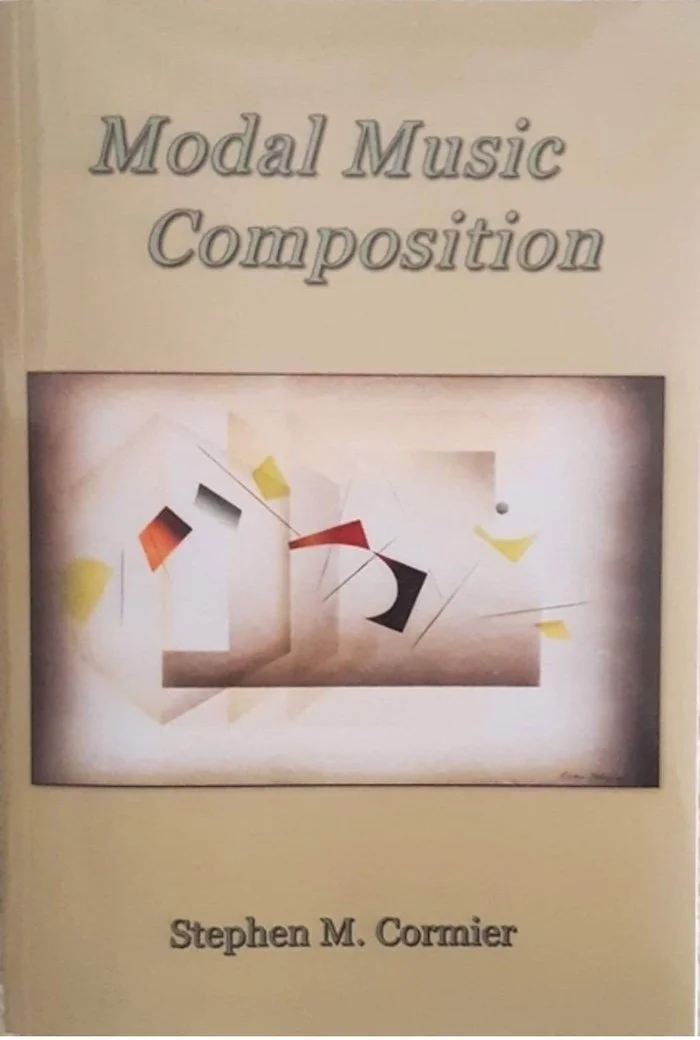
I am excited to be playing Stephen M. Cormier’s “Modal Song'“ with Rhonda Buckley-Bishop on tomorrow night’s program! I have posted our latest rehearsal audio here.
This is my second attempt to perform his music, which is unique, in that he has evolved a modal harmonic system that is perfectly congruent with classical harmony, only based on the whole range of modal scales, (as far as I understand it). He has published the only real textbook on modal harmony, and although people gripe and complain about how hard it is to understand, they purchase it and read it - it is in its fourth English edition.
My previous attempt to play his music came to grief, at least temporarily, due to the great unfamiliarity of the harmonic language, in part. The writing was very contrapuntal, in ways reminiscent of fugal writing, but without the familiar tonic and dominant pillars to rely on. Furthermore, his writing makes great use of a peculiar quarter note triplet displaced by one eighth note, which sounds wonderfully jazzy, but requires some re-education to feel naturally. The piece was large, ambitious, and required coordination with a (!) trap set drummer. After six months I reluctantly gave it up, and welcomed this much easier example of his wonderfully unique music.
We have commissioned a new work for flugelhorn and piano, based on the writing of Josquin des Prez. (I begged him for a simplified piano part!) Looking forward to premiering it this season!
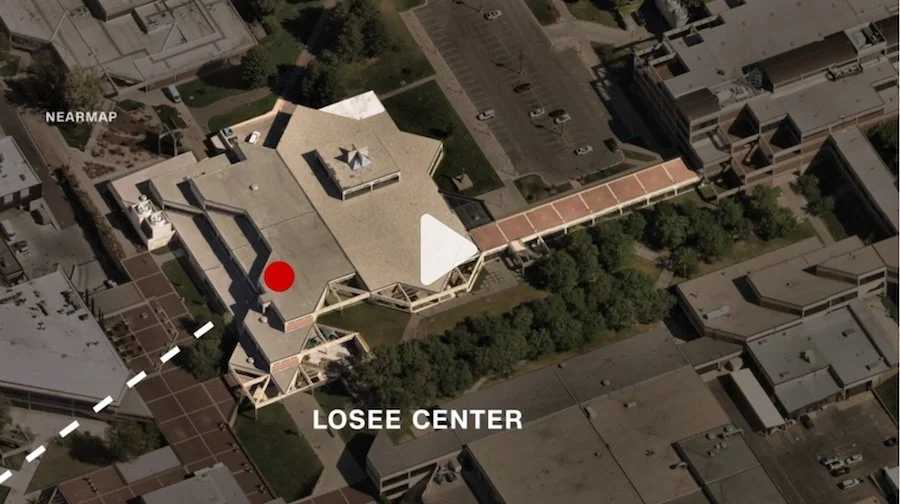
One reason the FBI might be struggling to find the assassin
Donelll Harvin writes today in Just Security: How the United States Is Undoing the Post-9/11 Security Architecture That Has Kept It Safe
I am very worried.
Related post from emptywheel.