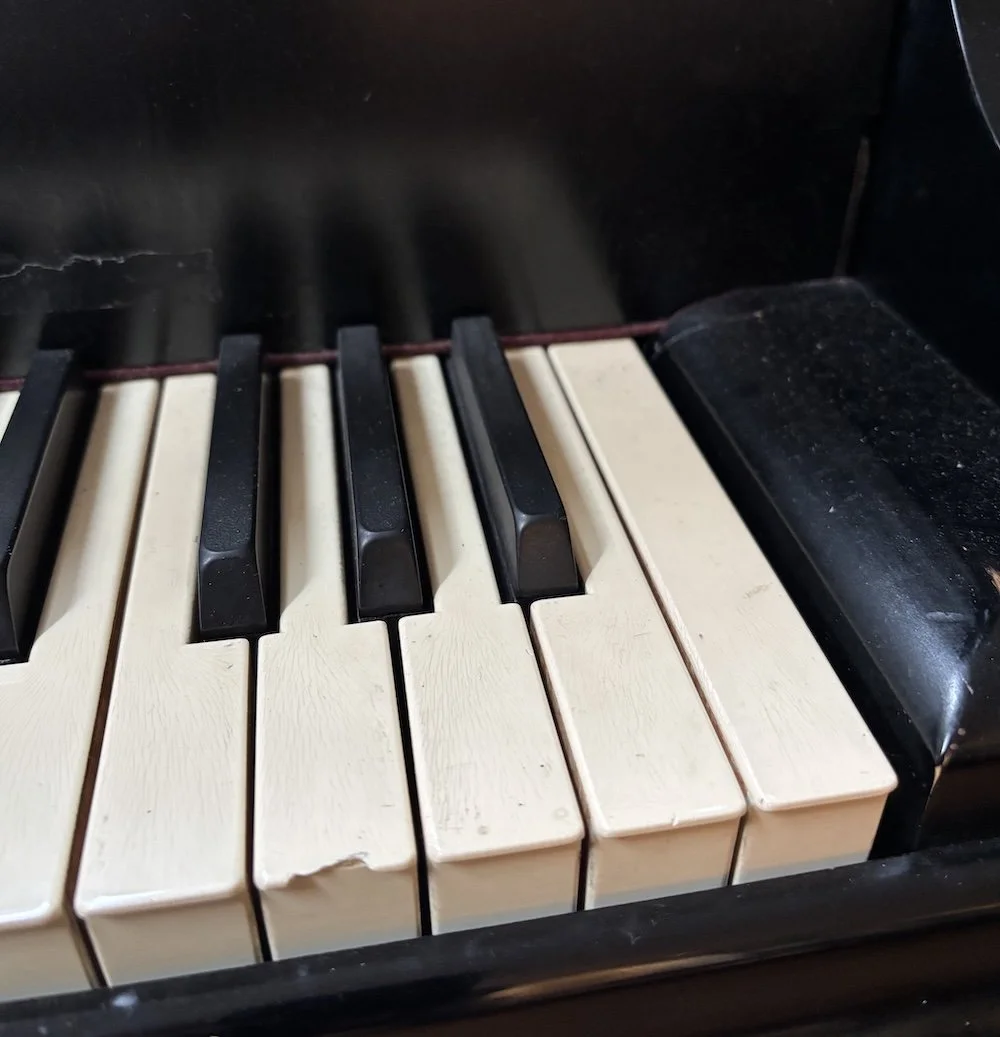
Throughout my education, I was advised to do things this way or that way and think about them this way or that way, and I was always very stubborn about refusing to do so. This infuriated my teachers, and left me completely isolated. I knew that what they were suggesting or insisting on was wrong, but I didn’t know how to get to “right”. In the end, however, my stubbornness has paid off - at my advanced age, I am beginning to find things that seem “right”, and this is very satisfying. I am so grateful for my early refusals, although I paid dearly in terms of “career” and public “success”.

“Soul Ladders”, Gallery 10, 1993
Bad Reviews
Mar and I have had our share of bad reviews! Here is what Michael Welzenbach had to say about her Soul Ladders in the review of the Gallery 10 show “Tough Issues” in the Washington Post in 1993:
“ Nearby, Marilyn Banner offers the found-object sculpture “Soul Ladder.” Presumably intended to detail more horrors attendant to the condition of being female, it comes off instead as unsightly trash on a ladder.”
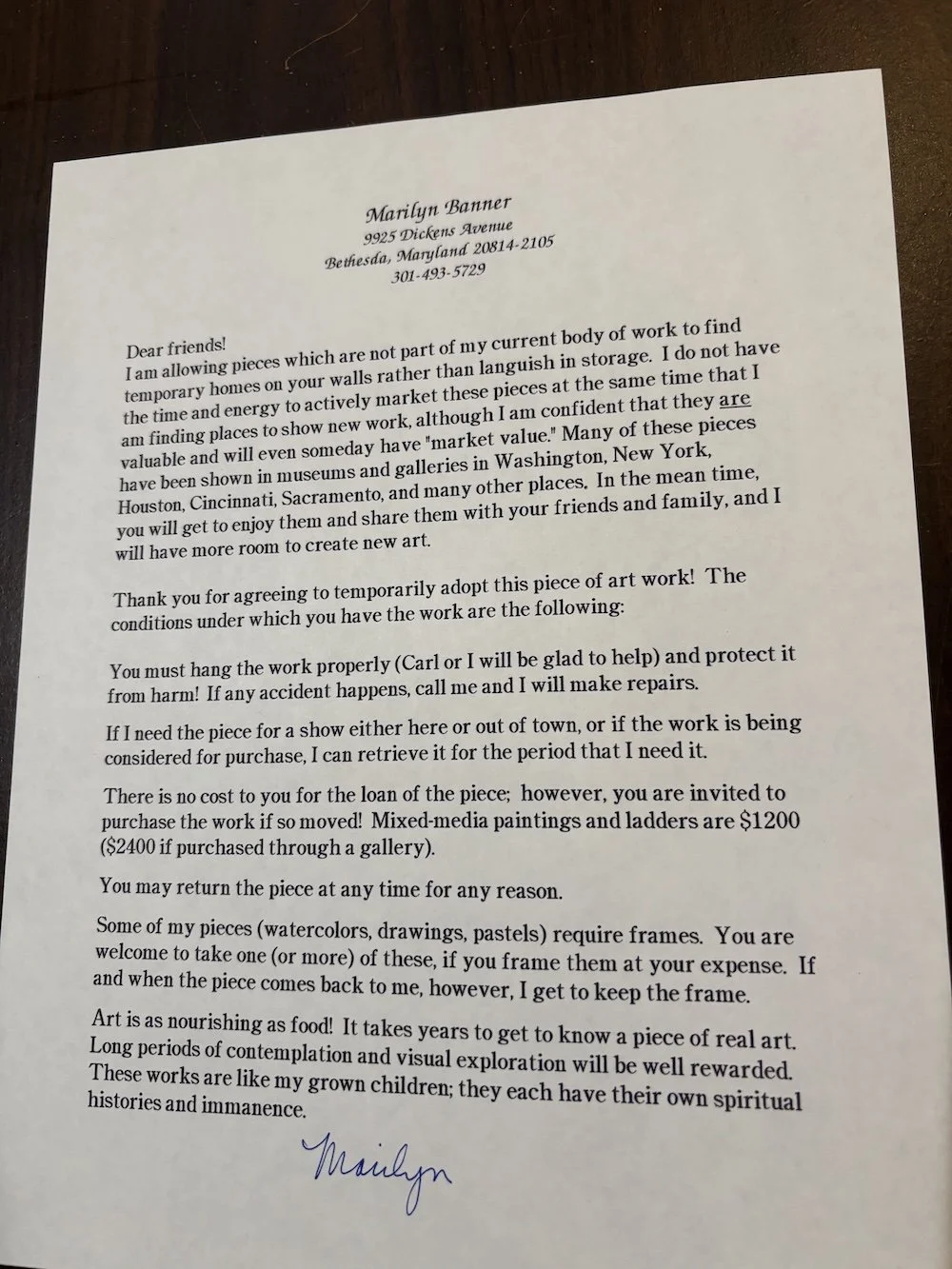
Desperation of Artists: 1991
Third Grade Photo
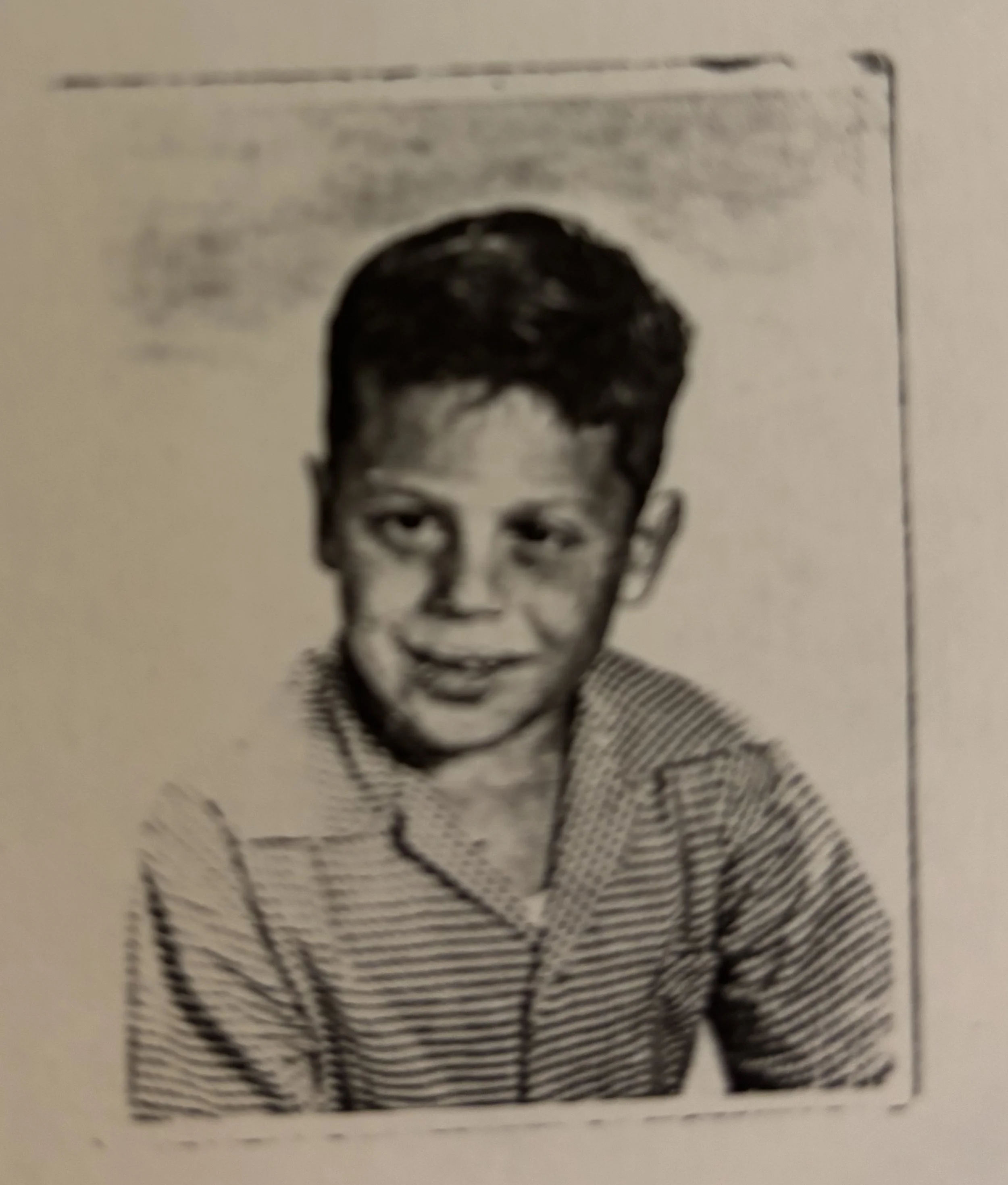
I was desperately unhappy in third grade.

“Butch Ballet”
Gender Issues
It frequently happens (every few months or so) that I am addressed as ma’am, or “ladies” when I am with Marilyn, at a restaurant or other business. It has happened maybe a hundred times over the past few decades. Again last night, at our local bar, “What would you ladies like?” “This happens to me frequently,” I said to the embarrassed server. “I guess I look like an aging, very butch lesbian.”

Bot update: Ashburn VA
From AI - Why is most of my web traffic from Ashburn VA?
Why Ashburn Shows Up in Your Analytics
Data Center Hub: Ashburn is known as the "Data Center Capital of the World" and hosts massive server farms for Amazon Web Services (AWS us-east-1), Google Cloud, and Microsoft. [1, 2, 3]
Types of Bots: The traffic typically comes from AI training scrapers, search engine indexers, SEO auditing tools (like Ahrefs or Semrush), price scrapers, or card-testing scripts. [1, 2]
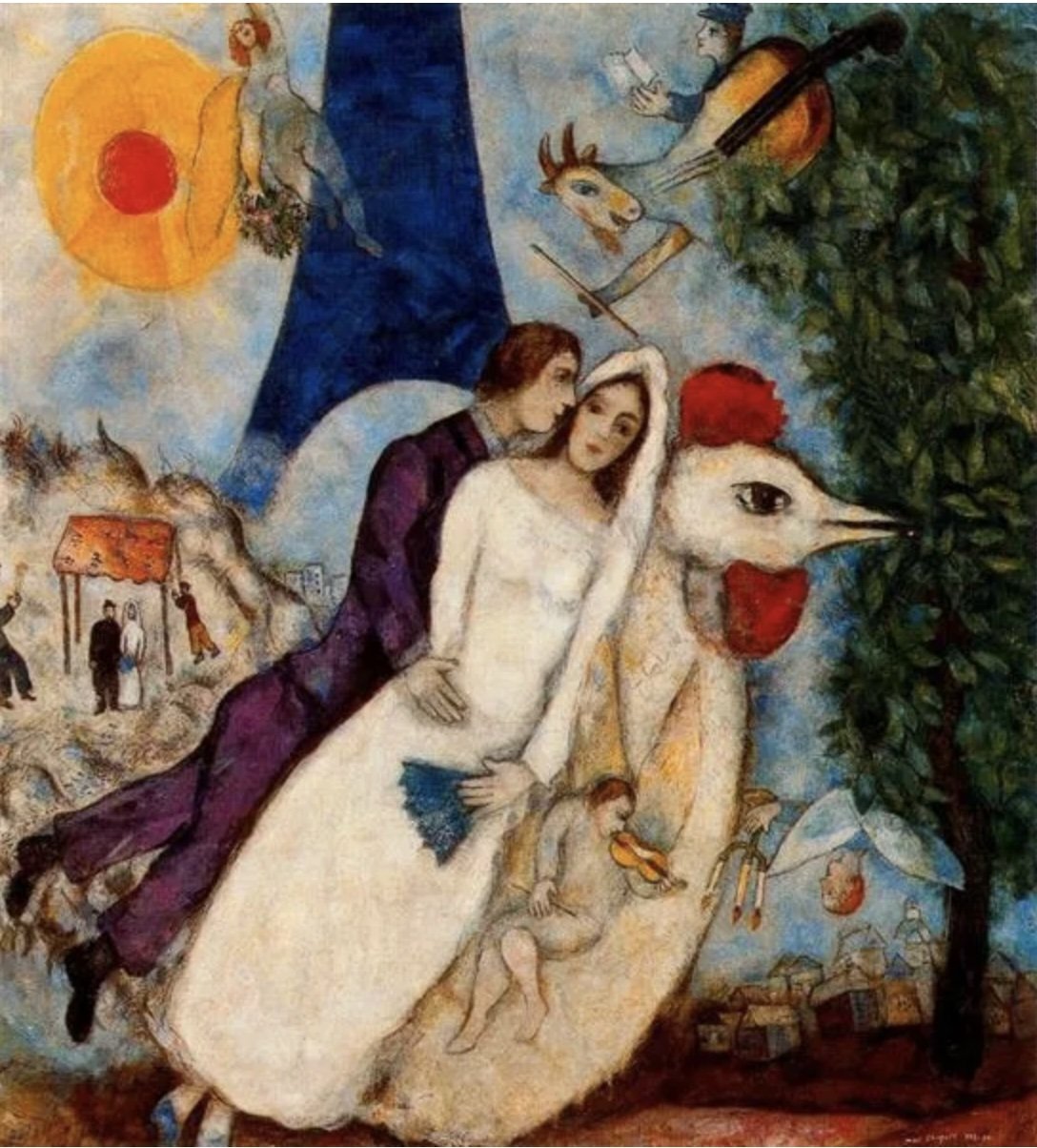
Painting by Marc Chagall
"Portrayal of the human form" - ironies
People manage to keep a lot of contrary ideas and prejudices in their minds simultaneously. Jewish people who have photos of the kids and grandkids all over the house, and a Chagall poster hanging on the wall, balk at purchasing contemporary art that “portrays the human form”. A Jewish-themed art piece was recently returned to us by a purchaser who explained that she didn’t realize when she bought it that it had people in it. I guess G_d really doesn’t have to explain Him/Her-self.
Judaism

Things I appreciate about Judaism:
__ Masturbation is not a sin.
__ You can think about anything.
__ Disagreement is OK.
__ G-d is not necessarily your friend.
__ There are a lot of stupid and/or contradictory stories.
__ Women are powerful.
Wellfleet, Cape Cod

A young unmarried couple decided that the Banners looked romantic on Mayo Beach at sunset and asked to photograph us. They wanted to know how long we had been married (52 years) and how we met.

Heavy aluminum pan, given to us in 1969 in Buffalo by a cellist friend who moved back home to Toronto. We call it “the Susan Mustard pan”, and it makes terrific omelets.
Strange Memories
Before we got married (in 1974), my mother told us we did not deserve to have nice pots and pans because we did not scour the bottoms.

Large stainless steel pan, found on the curb in front of a neighbor’s house in Takoma Park, with lid, around 2012. The handle frequently needs tightening, but it can cook a whole cabbage with onions.
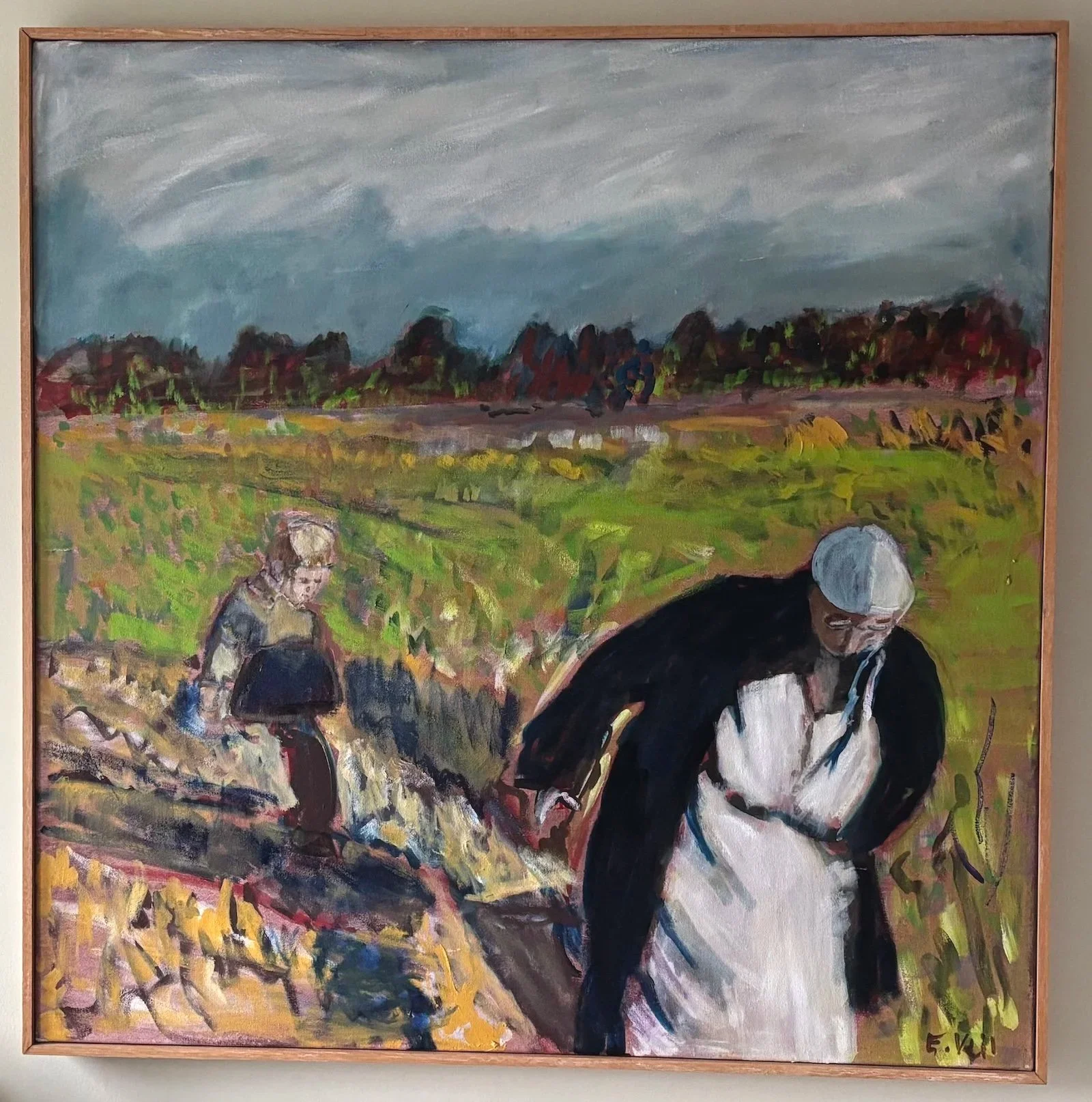
What Happens to Art When it is not Bought?
Many years ago we knew an older artist whose work was very well respected in the local art community. She painted large colorful abstract, often flowery, paintings in oil paint, and would have an annual or biennial show at her cooperative DC gallery. We attended what we suspected would be one of her last shows, as she was planning to move to a retirement community. We decided to buy a large painting, unusually figurative, with images of her mother and her daughter on the family farm. We paid $900, more than we had ever paid for art before. Later we learned that she had discarded her entire output before she moved. There remains one painting in her former church. What was not purchased or given to her family went to the landfill.
Joseph Brodsky, on Poetry
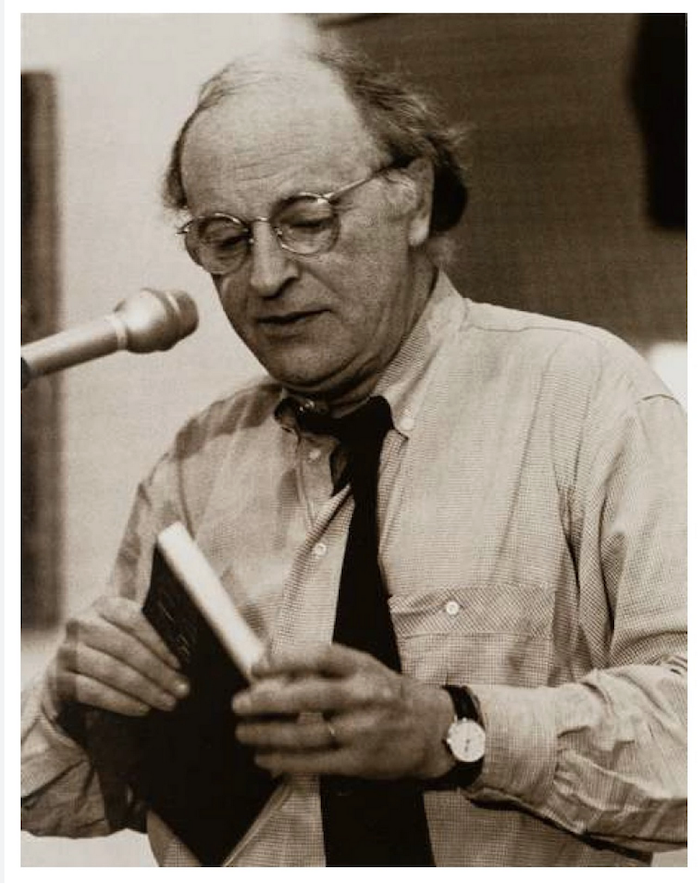
Joseph Brodsky
“… it must be pointed out that the old adage about a poet’s role in, or his duty to, his society puts the entire issue upside down. If one can speak of the social function of somebody who is essentially self-employed, then the social function of a poet is writing, which he does not by society’s appointment but by his own volition. His only duty is to his language, that is, to write well. By writing, especially by writing well, in the language of his society, a poet takes a large step toward it. It is society’s job to meet him halfway, that is, to open his book and to read it.
If one can speak of any dereliction of duty here, it’s not on the part of the poet, for he keeps writing. Now, poetry is the supreme form of human locution in any culture. By failing to read or listen to poets, a society dooms itself to inferior modes of articulation - of the politician, or the salesman, or the charlatan - in short, to its own. It forfeits, in other words, its own evolutionary potential, for what distinguishes us from the rest of the animal kingdom is precisely the gift of speech. The charge frequently leveled against poetry - that it is difficult, obscure, hermetic, and whatnot - indicates not the state of poetry but, frankly, the rung of the evolutionary ladder on which society is stuck.”
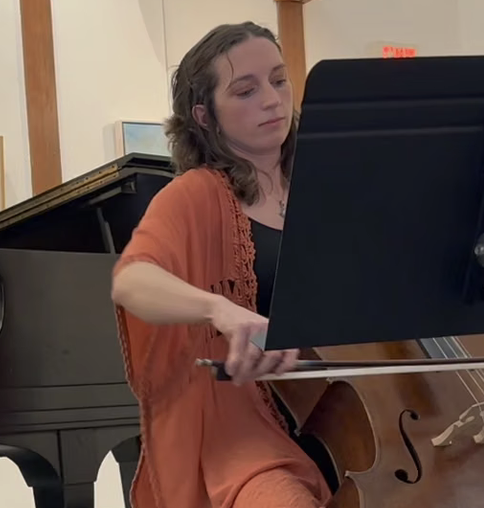
Emma Hays Johnson
Wellfleet Public Library Concert
Cellist Emma Hays Johnson and I performed Beethoven and Brahms Sonatas at the Wellfleet Public Library to a very enthusiastic audience of 60 people. Marilyn discreetly took some clips on her phone.

Bob Dylan: Being 80
“The best thing about being 80 is that you outlive the clocks that have been chasing you. It’s freedom from that lie that anything was ever under control. You don’t chase the parade anymore. You’re an old king from some vanished country. You’re harder to program. You’re not rushing to become anything and you’re not haunted by things that you did. You’re haunted by how little of it really mattered in the way you thought it would.
The worst thing about being 80 is that you still want to say yes to everything, but the world moves without asking. The old fire in your heart still tells you to do this and that, but your body says we already did it. Also, nothing surprises you. It sounds like a luxury but it’s not, and also you’ve run out of illusions. People treat you like either you’ve solved something or you’ve lost something, and you haven’t. You see life repeating itself everywhere.
The really worst part about being 80 is that you find, at last, you’ve got an understanding of something that might have altered everything in the past, had it come at a time when something could still be altered. When you’re young you think that time moves forward. At 80 you know that it doesn’t, it stands still. We’re the ones that move.”
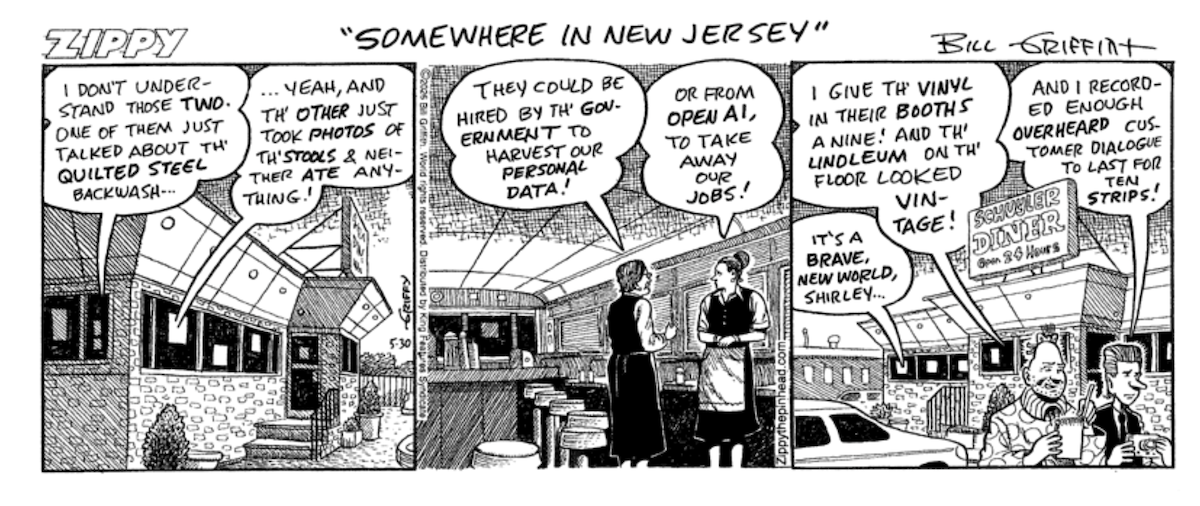
Zippy Today
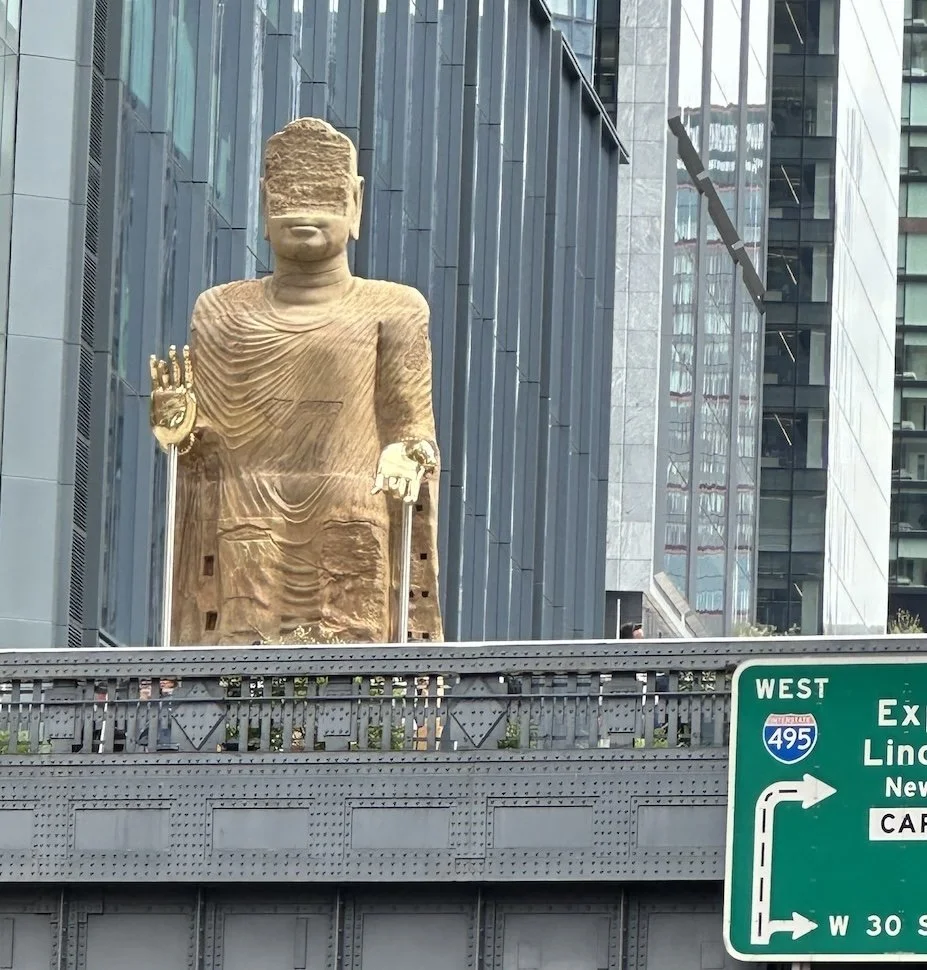
High Line Buddha
More photos: Chelsea
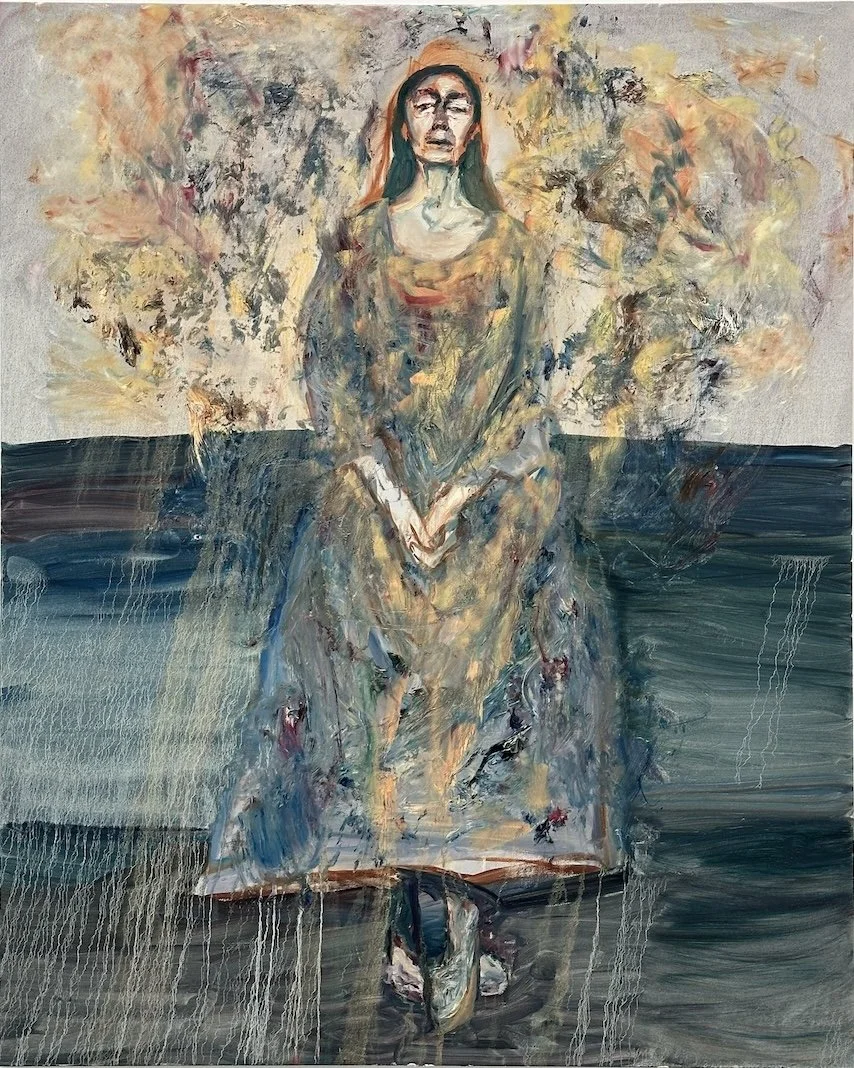
Celia Paul, self-portrait (Gladstone Gallery)
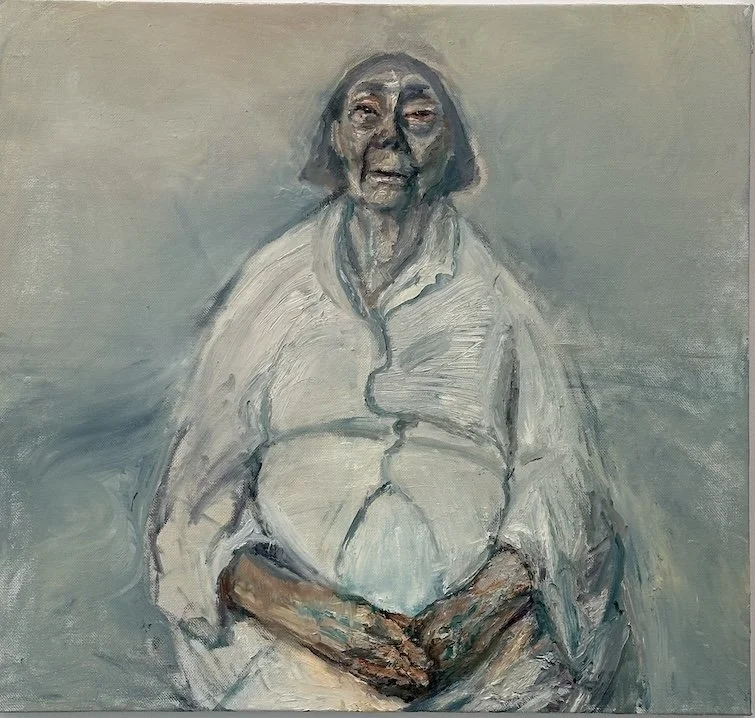
Celia Paul, portrait of her mother (Gladstone Gallery)
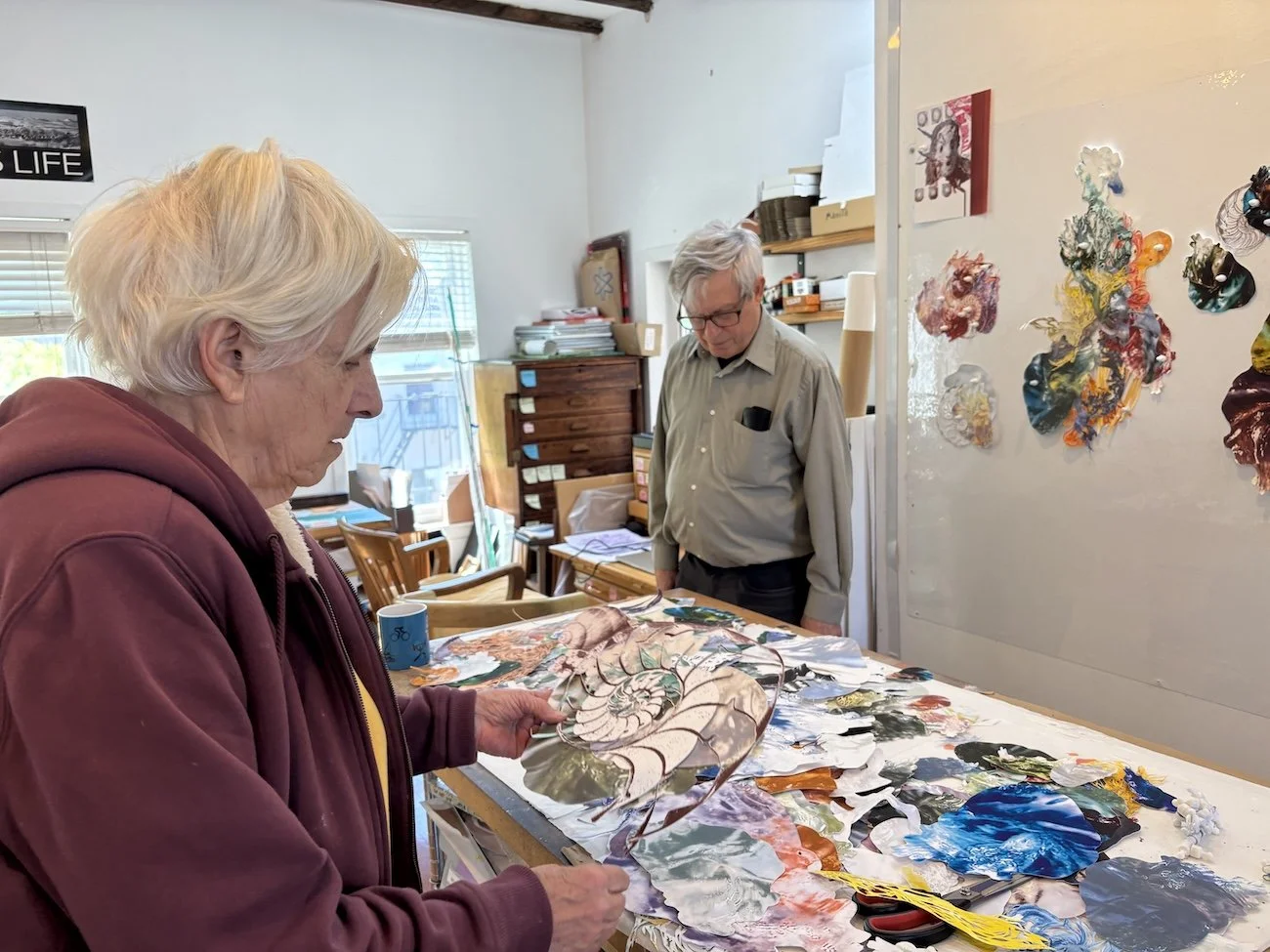
Betsy in her studio with work in progress
A Visit with Betsy Damon
Artist Betsy Damon has had a tremendous influence on many people’s lives, including Marilyn’s and mine. We had the privilege of visiting her Brooklyn studio while we were in NY. Her recent work is very beautiful and exciting!
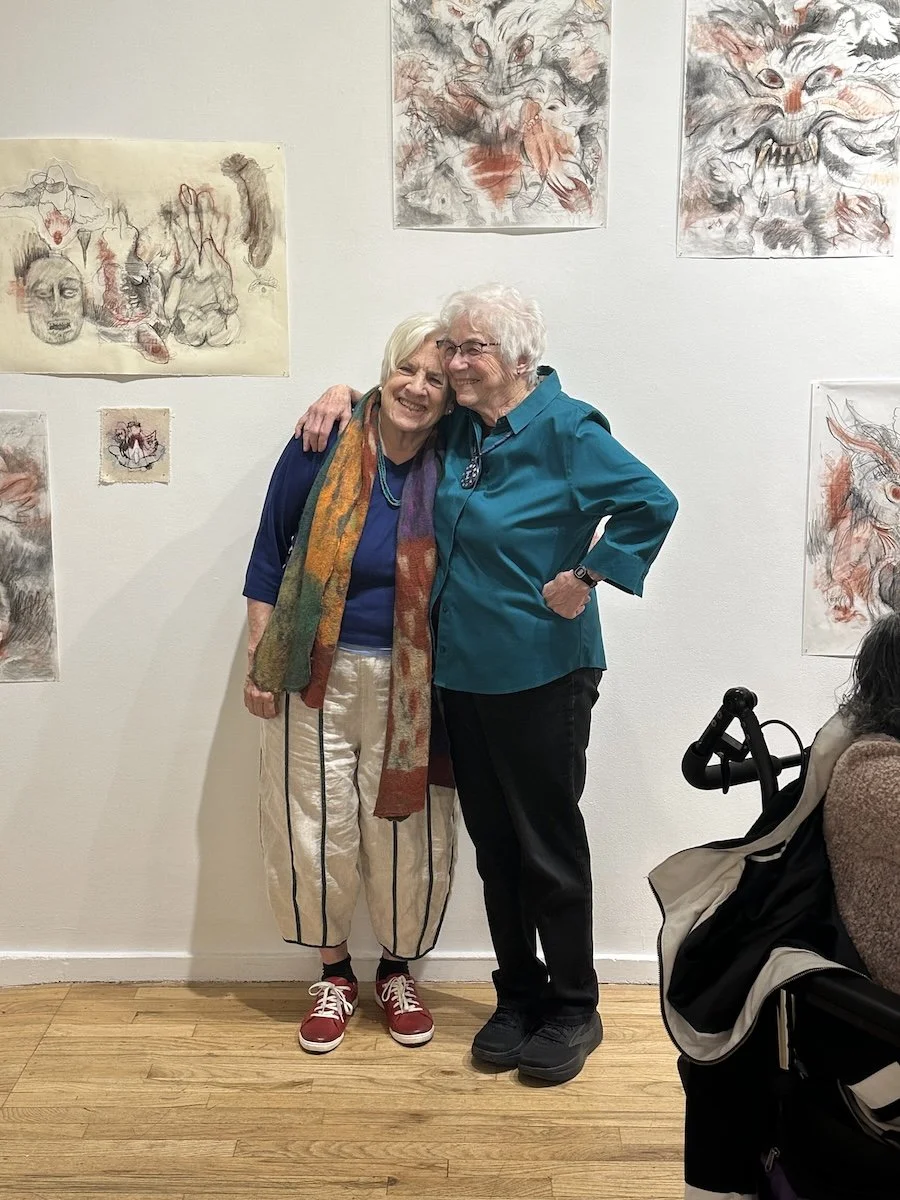
Betsy and Mar at the Ceres opening.
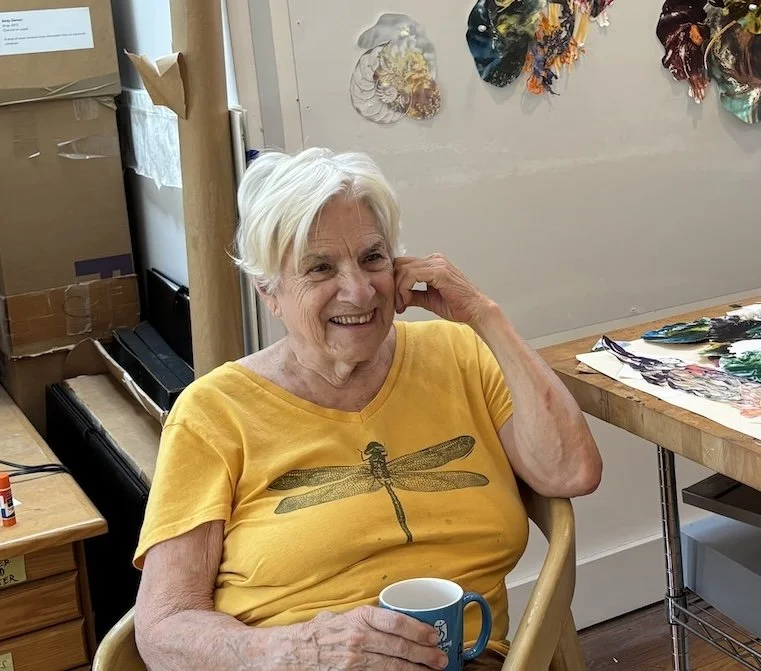
Betsy Damon
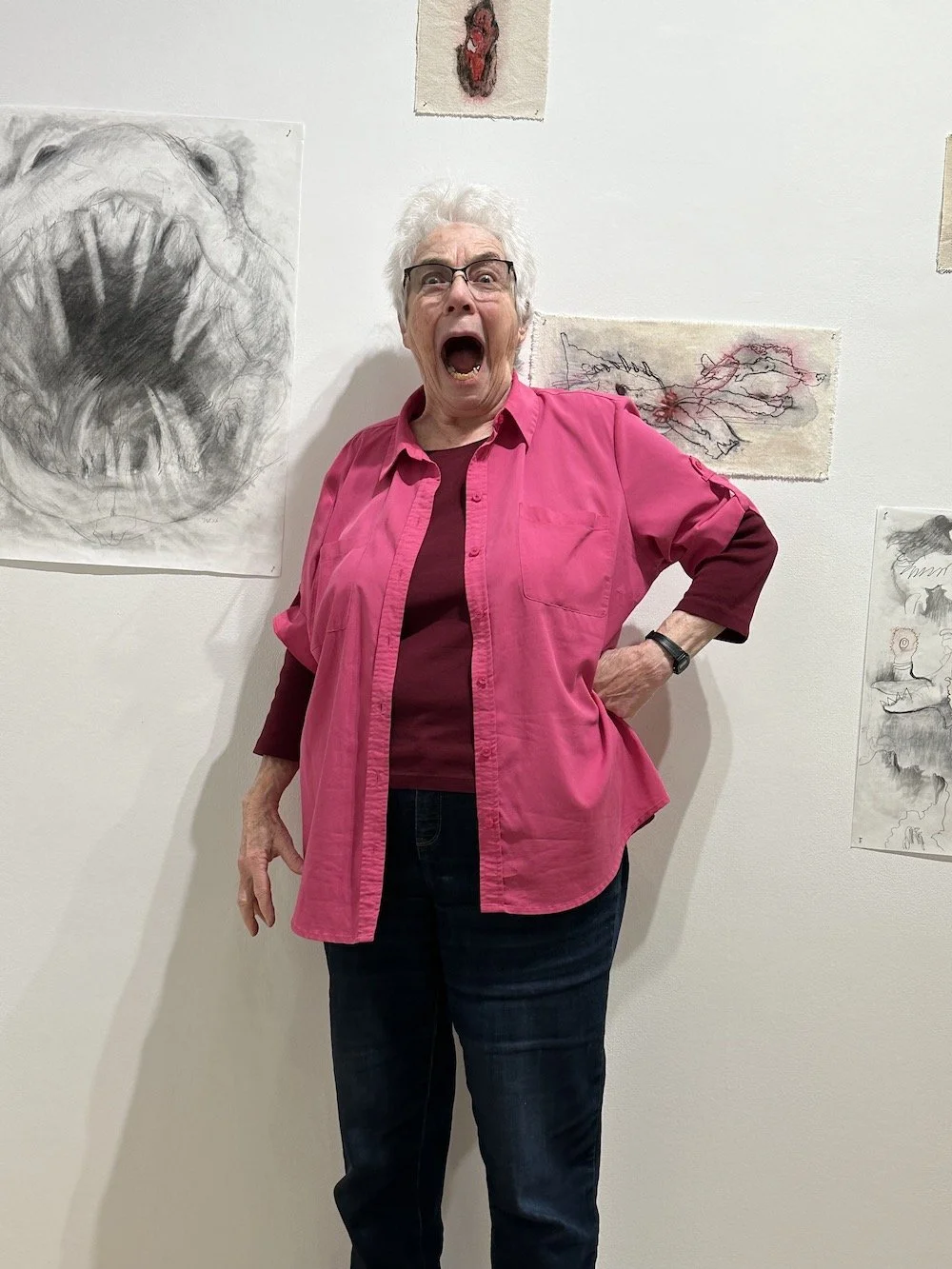
More NY Ceres Opening
Mar claims she used photos of her own mouth to get the shark drawing right.
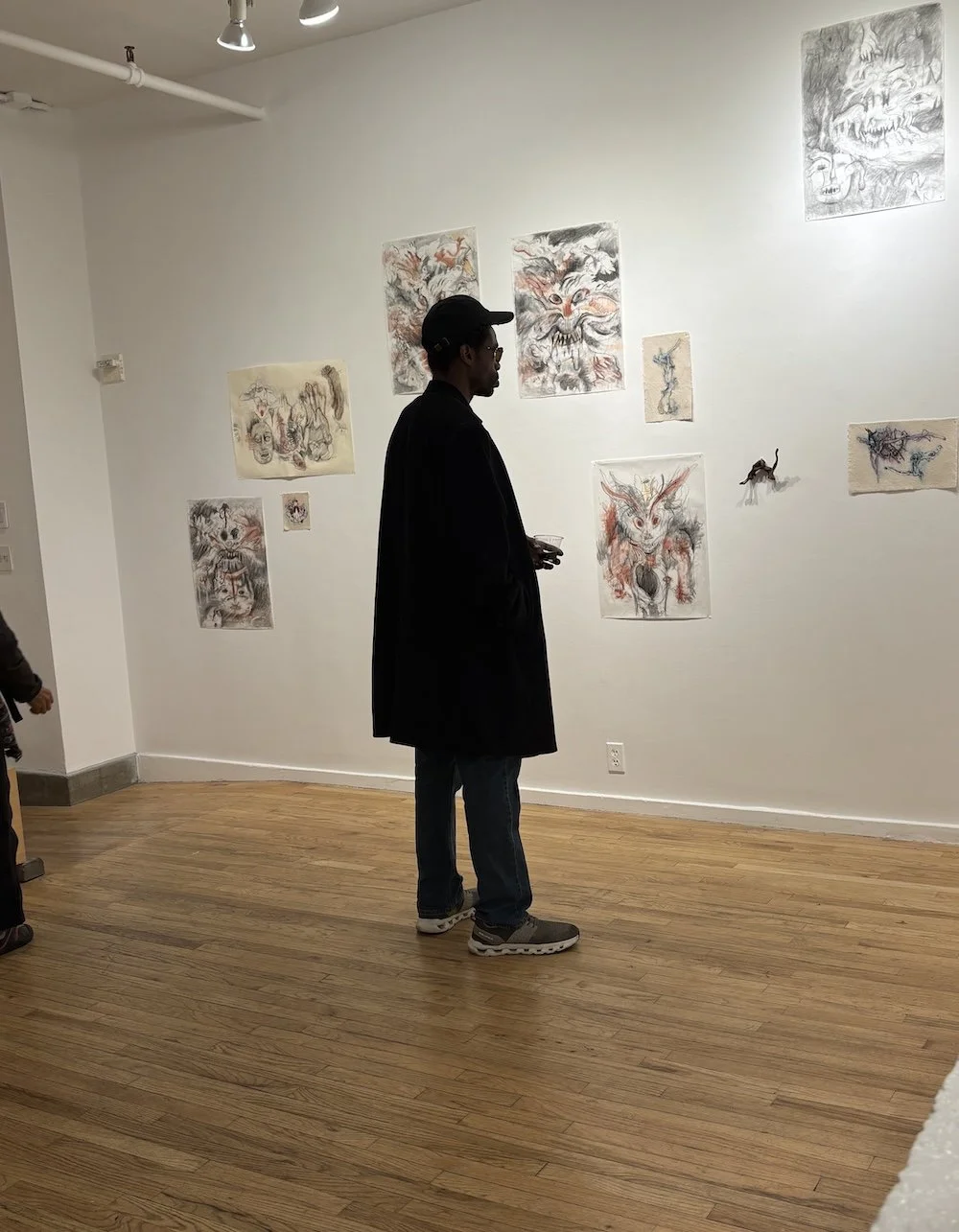
In NY people seem to “eat” art! (But unfortunately rarely buy it).

How the skyscrapers get their water.
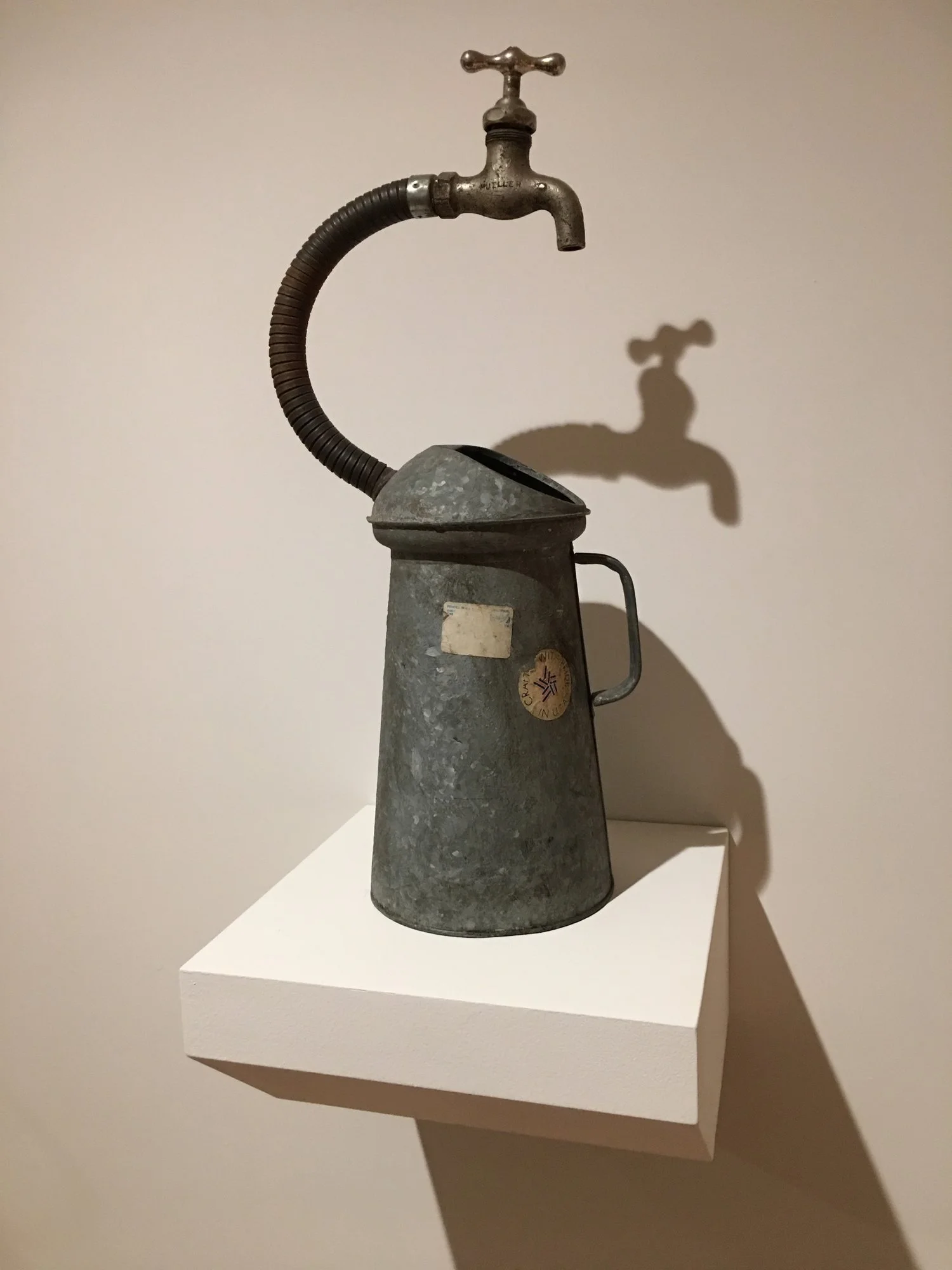
Magic Watering Can (Lonnie Holley)

Lonnie Holley
It is time to re-post Lonnie Holley’s magic watering can, the quintessential symbol of the arts. “That is how the arts look to us - they thrive and survive on their own creativity and divine sourcing.”
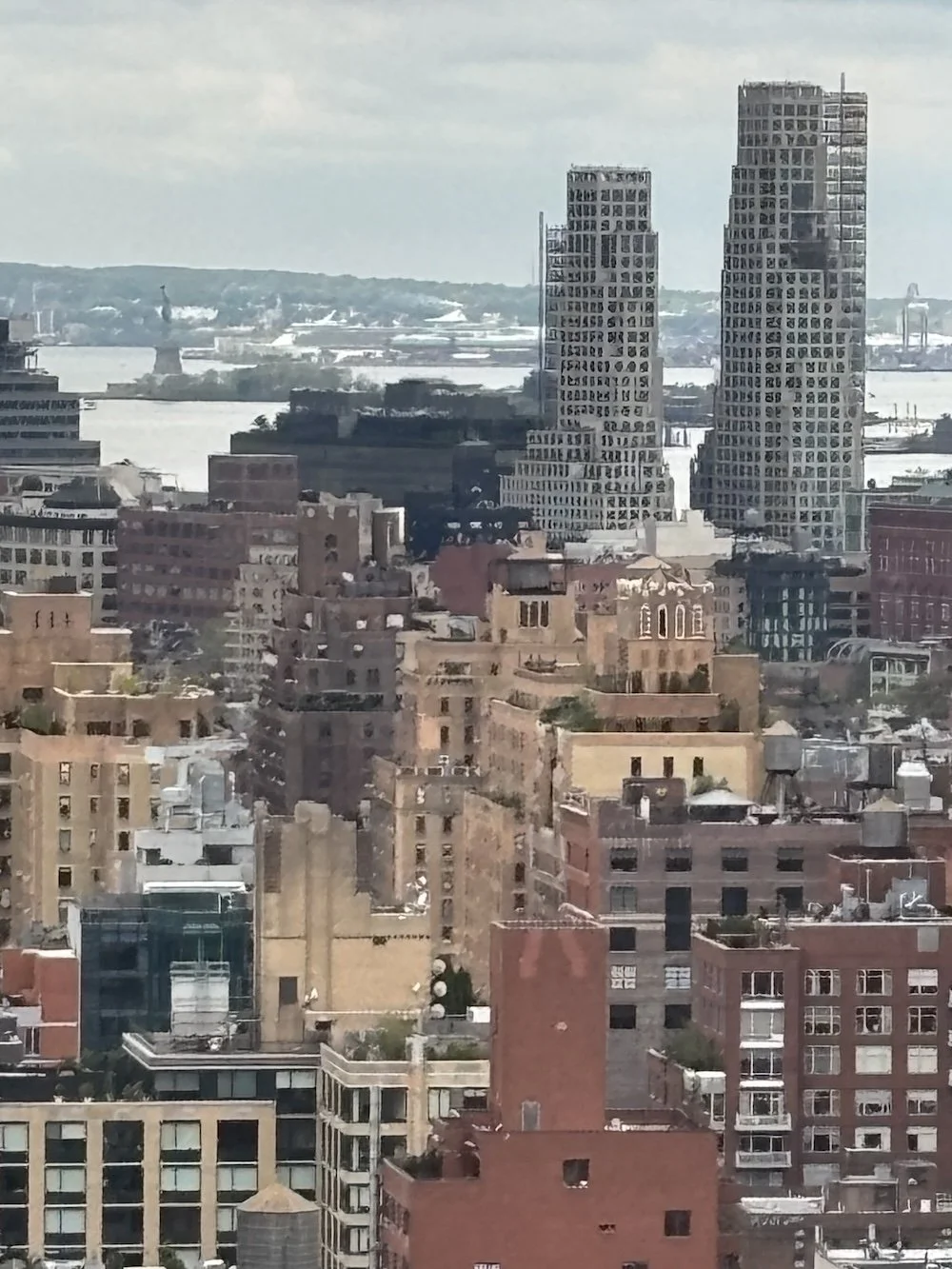
View from our room on the 34th floor of the hotel on 28th St in Chelsea.
New York
We just got back from a week in NY, installing Marilyn’s art show at Ceres Gallery in Chelsea.
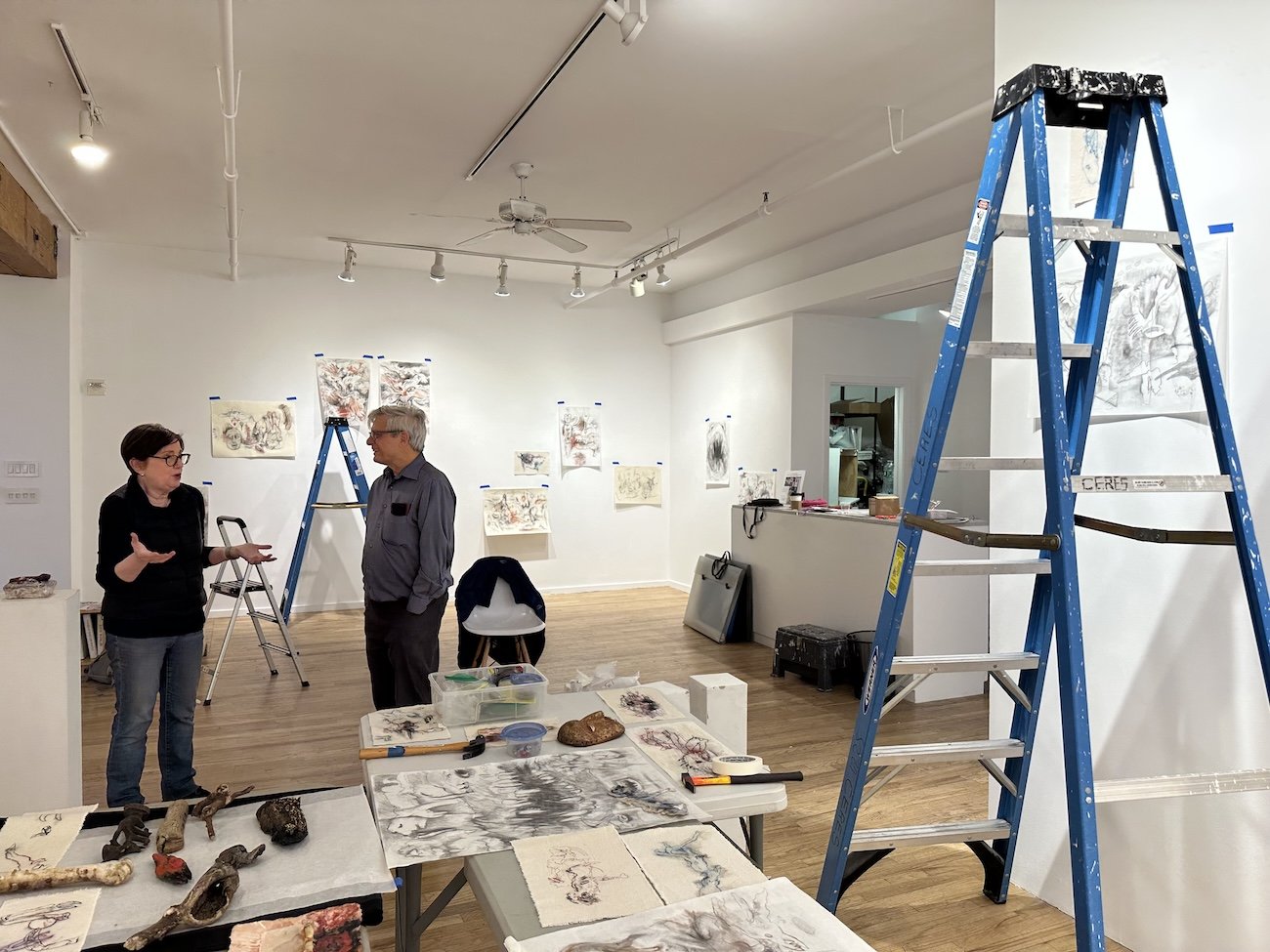
With Ceres Gallery director, Stephanie Benson

These young artists wanted to know what it takes to continue to do art seriously into your 80’s, when everything seems to be against you.
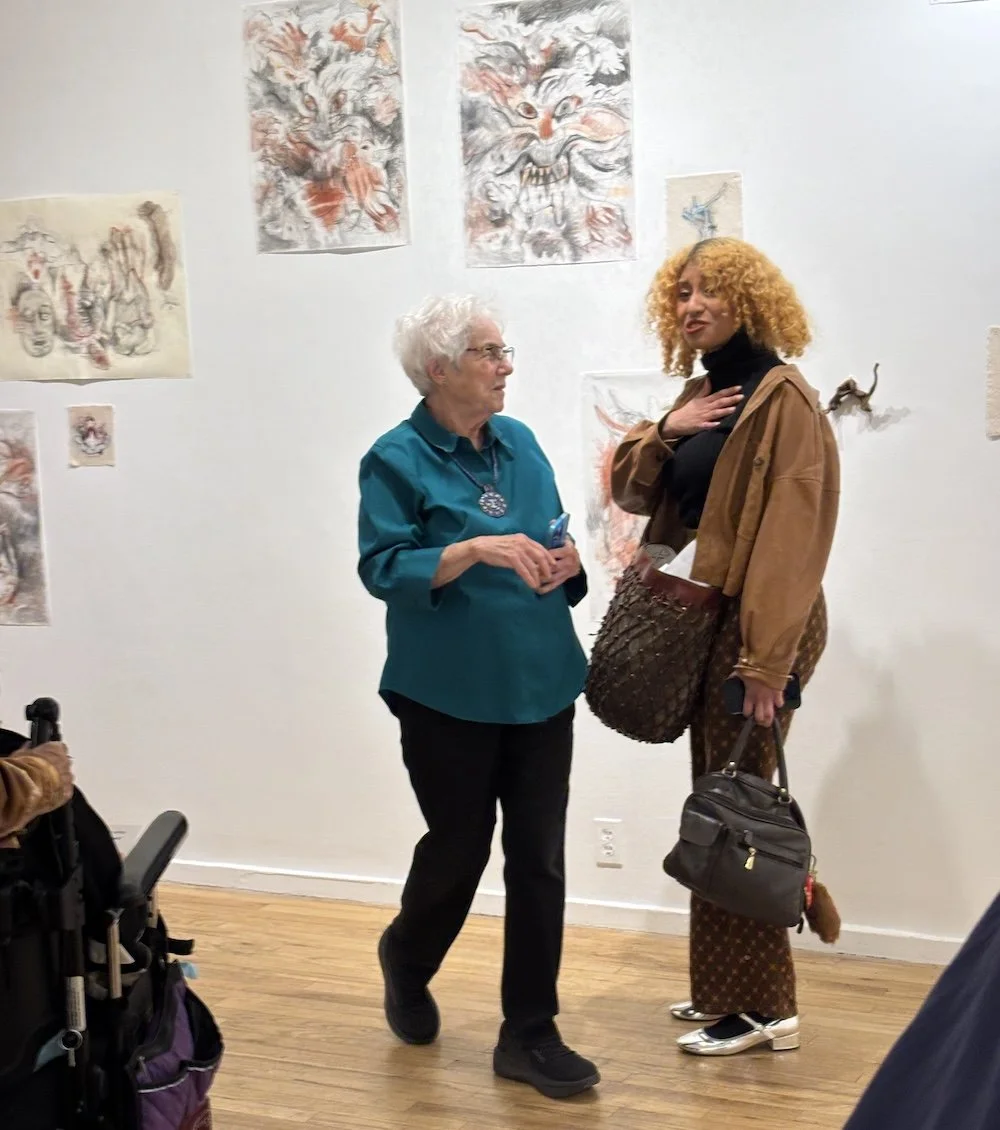

Youth and glamour at the opening reception.
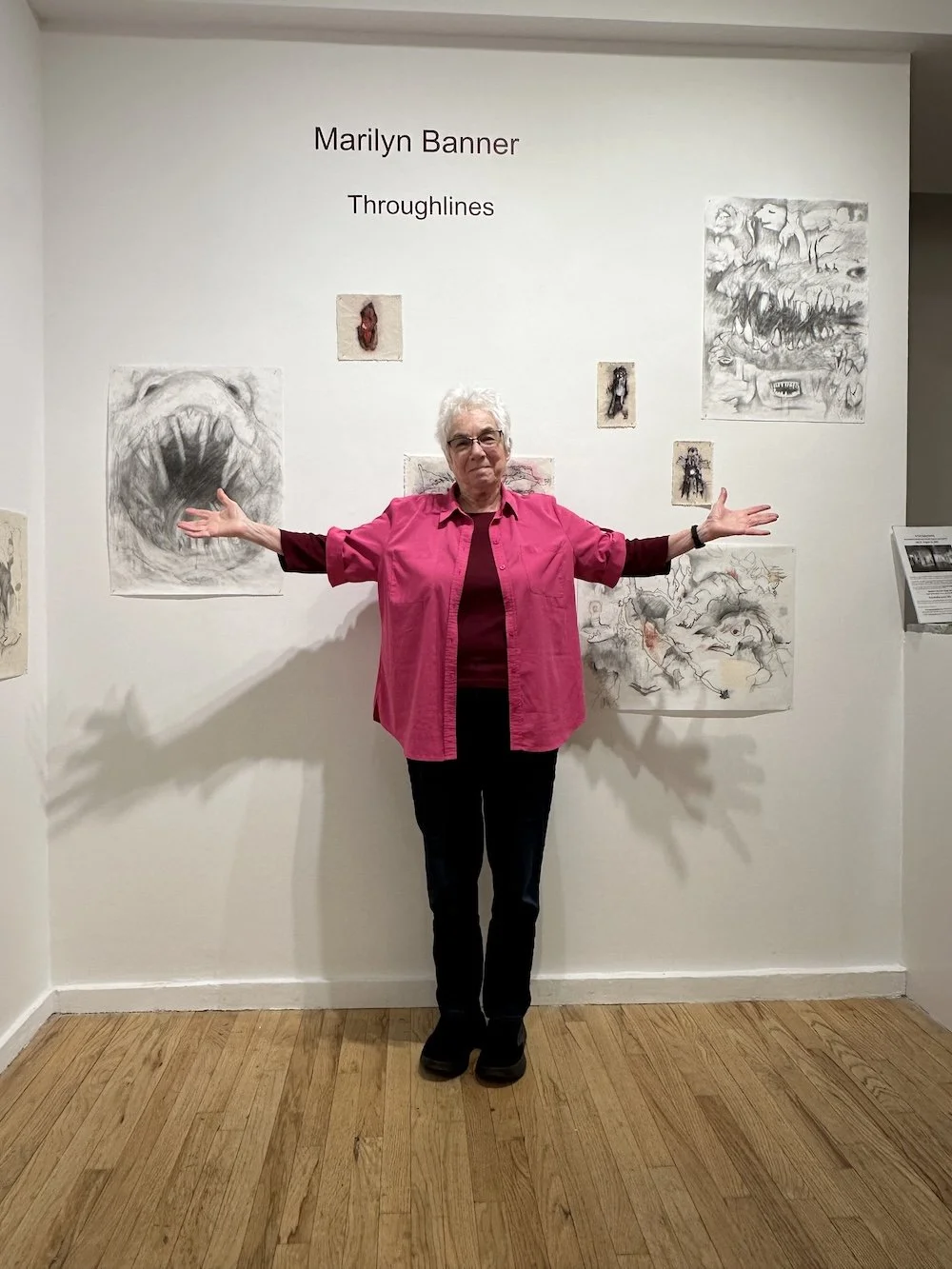
Marilyn Banner